
ChatGPT alone now has over 900 million weekly active users, with millions more on Claude and Gemini, many asking for product recommendations, service comparisons, and brand advice. When those AI systems answer, they either mention your brand or they don't, and most companies have no idea which one is happening.
AI brand visibility monitoring tools track where and how your brand appears in these AI-generated answers, measuring everything from mention frequency to sentiment to share of voice against competitors. This guide breaks down what to look for in an AI visibility platform, compares the top 10 tools for 2026, and covers how to actually improve your presence once you know where you stand.
What is AI brand visibility monitoring
AI brand visibility monitoring tracks how your brand appears in AI-generated answers from platforms like ChatGPT, Gemini, Claude, and Perplexity. These tools calculate visibility scores based on mention frequency, citation rates, and competitor benchmarking, giving you a concrete view of your presence in AI search rather than leaving it to guesswork.
Here's the key distinction: Google rankings don't predict whether ChatGPT will recommend you. AI answer engines pull from different signals, weigh authority differently, and update their responses far more frequently than traditional search results. A brand ranking first on Google might not appear at all when someone asks Claude for recommendations in the same category.
AI brand visibility: Whether your brand gets mentioned, recommended, or cited when someone asks an AI for advice in your category
Monitoring: Continuous tracking of those mentions, along with sentiment, positioning, and how you compare to competitors
Here's what that looks like in practice. A mid-market SaaS company connects its domain to GrowthOS, which automatically generates a set of prompts based on its category, questions like "what's the best project management tool for remote teams." The platform runs those prompts across 15+ AI platforms, then reports back a visibility score, which competitors are getting mentioned instead, and which specific pages or reviews to build to close the gap, all within about two minutes.
How AI brand visibility monitoring works
Most tools follow the same six-step process, whether you're doing it manually or with software.
Choose your prompts. Start with the real questions your buyers ask, like "what's the best [category] for [use case]."
Run them across LLMs. Test the same prompts on ChatGPT, Claude, Gemini, and Perplexity, since each platform can return a different answer. For a deeper walkthrough, see our guide on how to track your brand in Perplexity, Claude, Gemini, and ChatGPT.
Compare against competitors. See who gets mentioned instead of you, and how often.
Inspect the sources. Check which pages, reviews, or publications the AI cited to reach its answer.
Fix the content gaps. Build the citations and content that are currently missing.
Monitor changes. Track your visibility score over time as AI models update and new content gets indexed.
A typical visibility snapshot looks like this: visibility score 34 out of 100, mentioned in 12% of tested prompts, top competitor mentioned in 41%, primary citation source is G2 reviews. That single snapshot tells you exactly where you stand and where the biggest gap is.
Why AI brand visibility monitoring matters for your brand
When someone asks ChatGPT or Gemini for product recommendations, the AI either mentions your brand or it doesn't. If your competitors appear and you don't, you're losing consideration before prospects ever visit your site.
Traditional SEO tools weren't built for AI answer engines, and Gartner predicted a 25% drop in traditional search volume by 2026 due to AI chatbots. They track Google rankings, not AI-generated responses. Meanwhile, AI systems shape buyer perception in ways that don't show up in your existing dashboards. Most brands have no visibility into what AI actually says about them, which creates a blind spot that competitors can exploit. In our own research testing 1,000 brand queries across five AI platforms, 70% of brands tested were completely invisible.
Competitors get recommended while you remain invisible
AI answers influence decisions before anyone clicks through to your website, with an IAB study finding AI is the second most influential shopping source among consumers who use it
Standard SEO tools don't capture what's happening in AI search
What to look for in an AI visibility platform
Not all AI visibility tools offer the same depth. Some provide basic mention tracking, while others deliver real-time alerts, competitor intelligence, and actionable recommendations. The difference between surface-level checkers and comprehensive platforms comes down to a few key capabilities.
Real-time brand mention tracking
AI answers change quickly, sometimes within days of a model update. Real-time monitoring catches shifts as they happen, alerting you the moment a competitor overtakes you or your visibility drops unexpectedly. Without continuous tracking, you might not discover a problem until weeks or months later.
Multi-platform coverage across ChatGPT, Claude, Gemini, and Perplexity
Different AI platforms recommend different brands for the same query. A tool that only tracks ChatGPT misses what Claude or Gemini users see. Look for coverage across at least four major platforms to get an accurate picture of your overall AI presence.
Competitor benchmarking and share of voice
Share of voice measures how much of the AI conversation your brand owns versus competitors. This metric reveals whether you're gaining ground or falling behind, and which competitors are capturing the recommendations you're missing. It's the AI equivalent of market share in traditional advertising.
AI crawler analytics for GPTBot and ClaudeBot
AI systems crawl your site differently than Google. Visibility into how GPTBot and ClaudeBot access your content reveals technical issues like weak signals, low-trust pages, or crawl problems that may hurt your AI rankings without affecting traditional SEO.
Actionable content and citation recommendations
Data without direction doesn't help much. The best platforms tell you what to fix: which content to create, which citations to build, and which pages to optimize. Prioritized recommendations ranked by expected impact help teams know where to start rather than guessing.
Pricing flexibility and free trial options
Pricing models vary widely, from credit-based systems to enterprise subscriptions. Free trials or instant reports let teams validate whether AI visibility is a problem worth prioritizing before committing budget.
AI brand visibility tracking tools comparison
Tool | Platforms Covered | Real-Time Alerts | Competitor Benchmarking | Free Option |
|---|---|---|---|---|
GrowthOS | 15+ including ChatGPT, Claude, Gemini, Perplexity | Yes | Yes | Free report |
Profound | ChatGPT, Claude, Gemini, Perplexity | Yes | Yes | Demo only |
SE Visible | ChatGPT, Gemini, Perplexity | Yes | Yes | Limited free |
Ahrefs Brand Radar | ChatGPT, Claude, Gemini | Yes | Yes | Paid only |
Brandlight | ChatGPT, Claude, Gemini, Perplexity | Yes | Yes | Demo only |
Otterly | ChatGPT, Claude, Gemini | Yes | Limited | Free tier |
Semrush AI Checker | ChatGPT, AI Overviews, Gemini | No | Limited | Free tool |
Peec AI | ChatGPT, Gemini | Yes | Yes | Trial |
Scrunch AI | ChatGPT, Claude, Perplexity | Yes | Yes | Trial |
AIclicks | ChatGPT, Gemini | Yes | Limited | Free tier |
10 best AI brand visibility software tools
For a broader comparison across every category of AI visibility tool, see our complete AI visibility tools and platforms guide.
1. GrowthOS
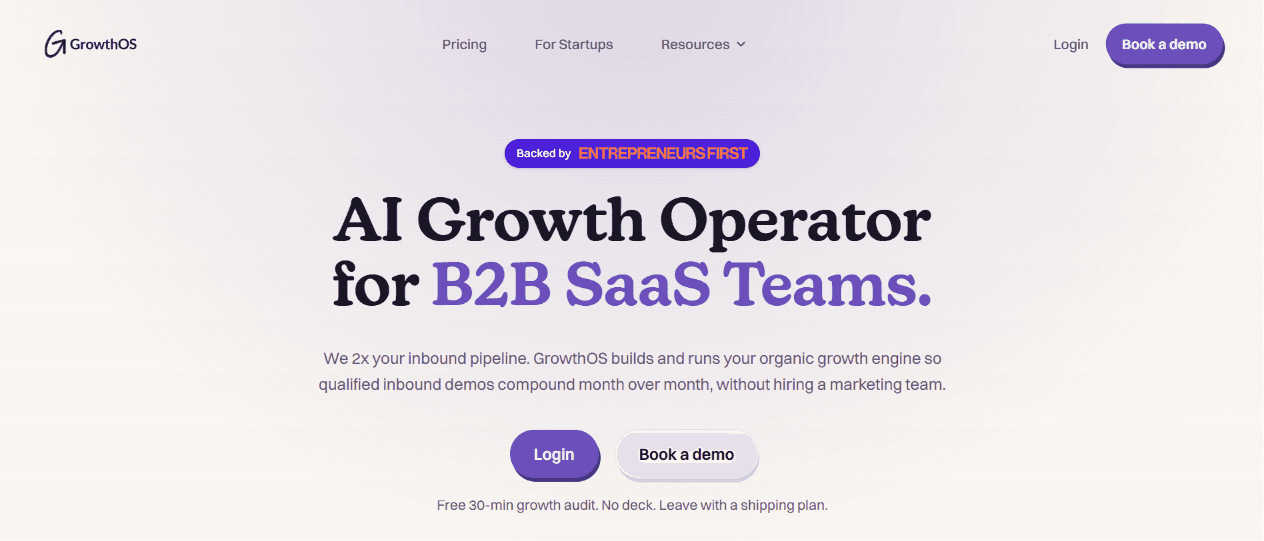
GrowthOS tests thousands of prompts across 15+ AI platforms to show exactly where competitors appear and you don't. The platform combines real-time analytics, competitor benchmarking, AI crawler analytics for GPTBot and ClaudeBot, and citation source analysis into a single dashboard.
What sets GrowthOS apart is the focus on action. Rather than just showing data, the platform provides prioritized recommendations for content creation, citation building, and page optimization, all ranked by expected impact. Credit-based pricing scales from a free plan to enterprise and agency tiers with white-label options.
The free AI visibility report delivers a snapshot of how your brand appears across ChatGPT, Claude, Gemini, and Perplexity in about two minutes, making it a low-friction starting point.
2. Profound
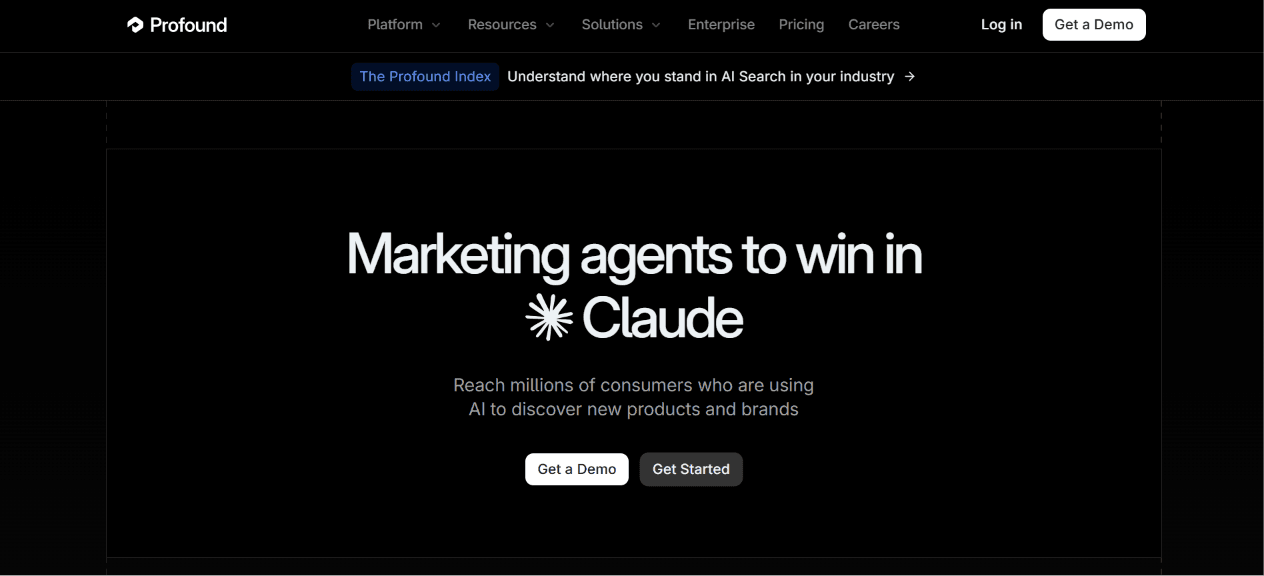
Profound targets marketing agencies managing multiple client brands. The platform offers white-label dashboards, sentiment analysis, and detailed competitive benchmarking across major AI platforms.
Agency teams appreciate the client-ready reporting, though pricing sits at the higher end of the market. For agencies already fielding questions from clients about AI visibility, Profound provides the infrastructure to answer them at scale.
3. SE Visible
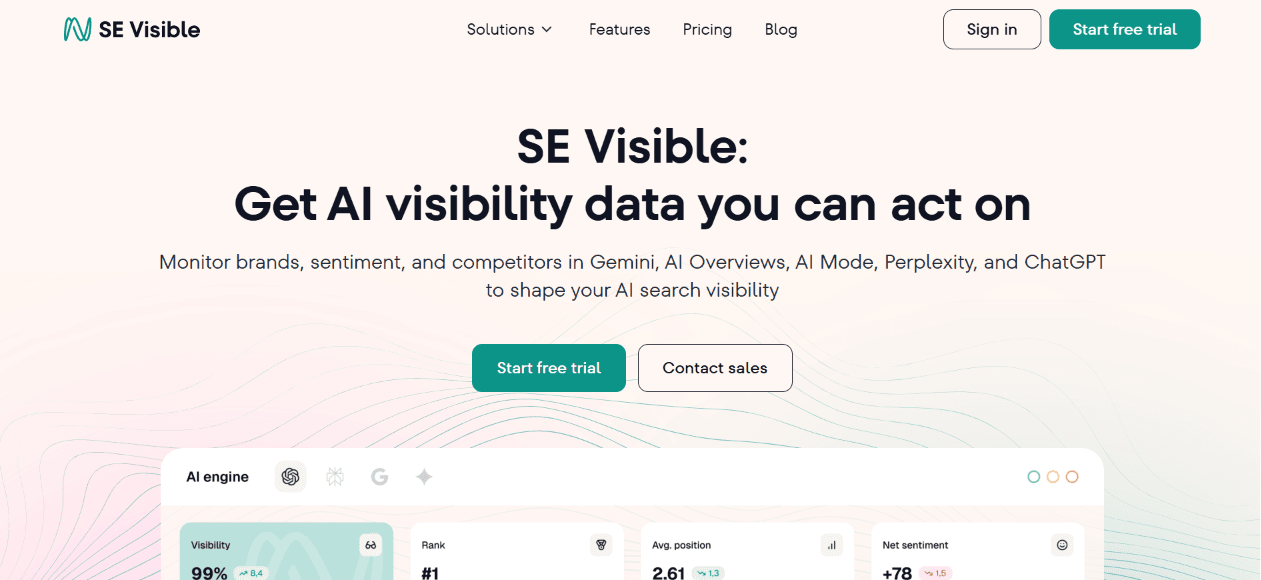
SE Visible provides straightforward AI visibility tracking with a clean interface. The platform covers ChatGPT, Gemini, and Perplexity with real-time alerts and competitor comparisons.
It works well for teams wanting essential monitoring without the complexity of enterprise features. The learning curve is minimal, which helps teams get started quickly.
4. Ahrefs Brand Radar
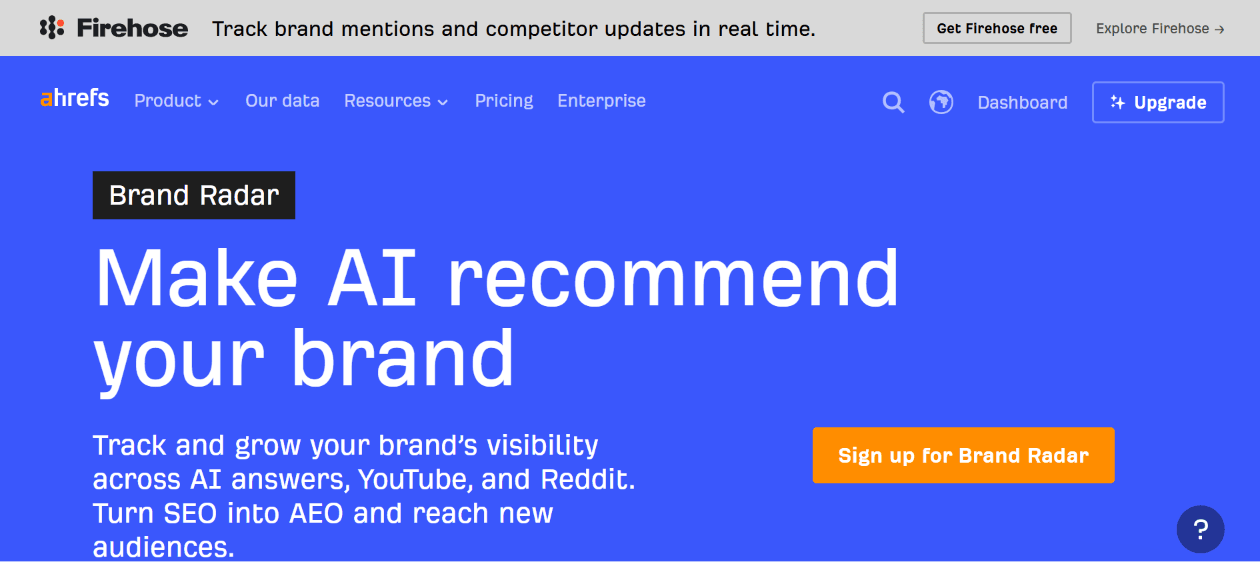
Brand Radar integrates AI visibility tracking into the existing Ahrefs platform. For teams already using Ahrefs for traditional SEO, this adds AI monitoring without requiring a separate tool or login.
The tradeoff: it's less specialized than dedicated AI visibility platforms, and there's no free tier. However, the integration with Ahrefs' broader SEO toolkit can simplify workflows for existing users.
5. Brandlight
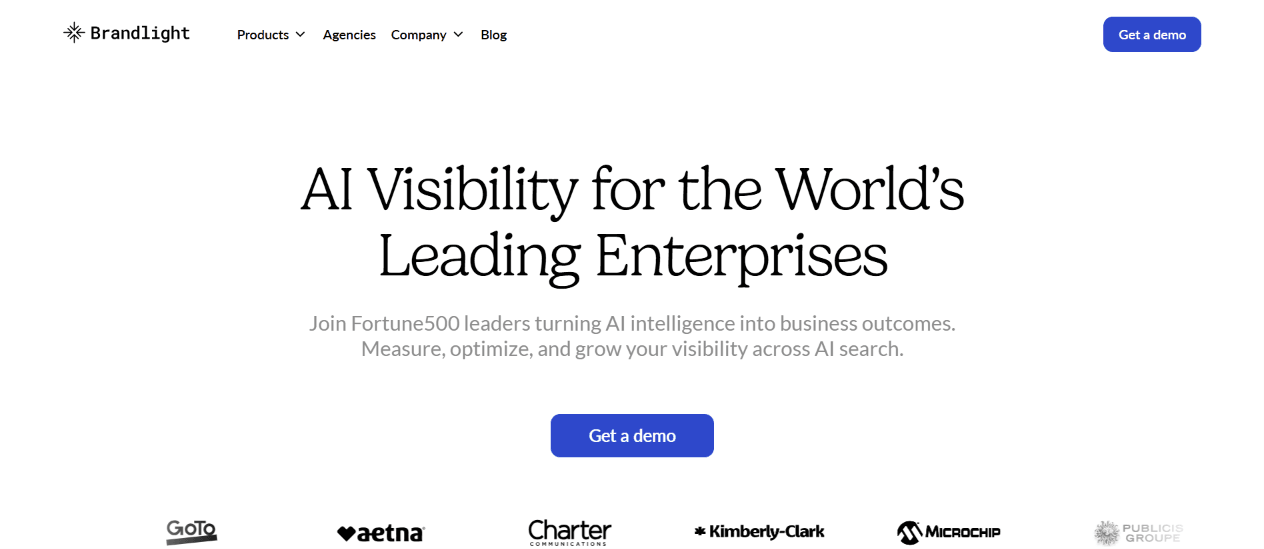
Brandlight focuses on enterprise clients, offering SOC 2 compliance and white-glove support. Fortune 500 brands use it for comprehensive AI reputation monitoring across global markets.
The enterprise focus means pricing and onboarding aren't designed for smaller teams. If you're a mid-market company or startup, other options on this list likely fit better.
6. Otterly
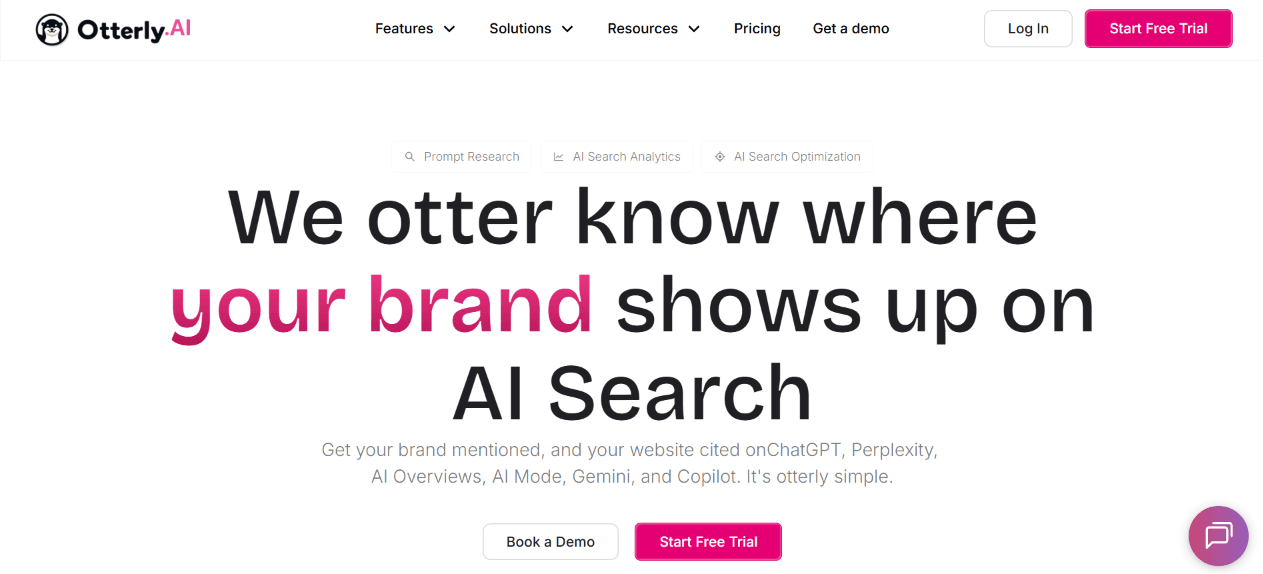
Otterly specializes in tracking brand mentions across ChatGPT, Claude, and Gemini with a straightforward interface. The free tier provides basic monitoring, while paid plans add deeper analytics.
Competitor benchmarking is more limited than some alternatives, so teams focused heavily on competitive intelligence may want to evaluate other options alongside Otterly.
7. Semrush AI Visibility Checker
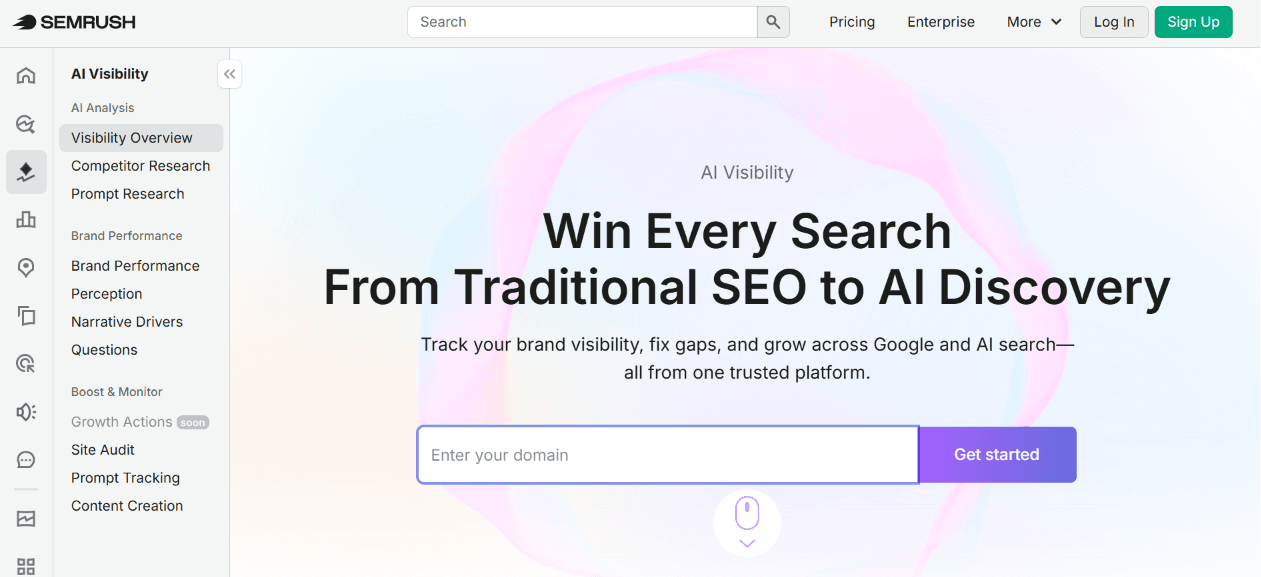
Semrush offers a free AI search visibility checker that provides a quick snapshot of your brand's presence. It's useful for initial diagnostics but lacks the continuous monitoring and depth of dedicated platforms.
Think of it as a starting point rather than a complete solution. For teams already using Semrush, it adds a basic AI visibility layer without additional cost.
8. Peec AI
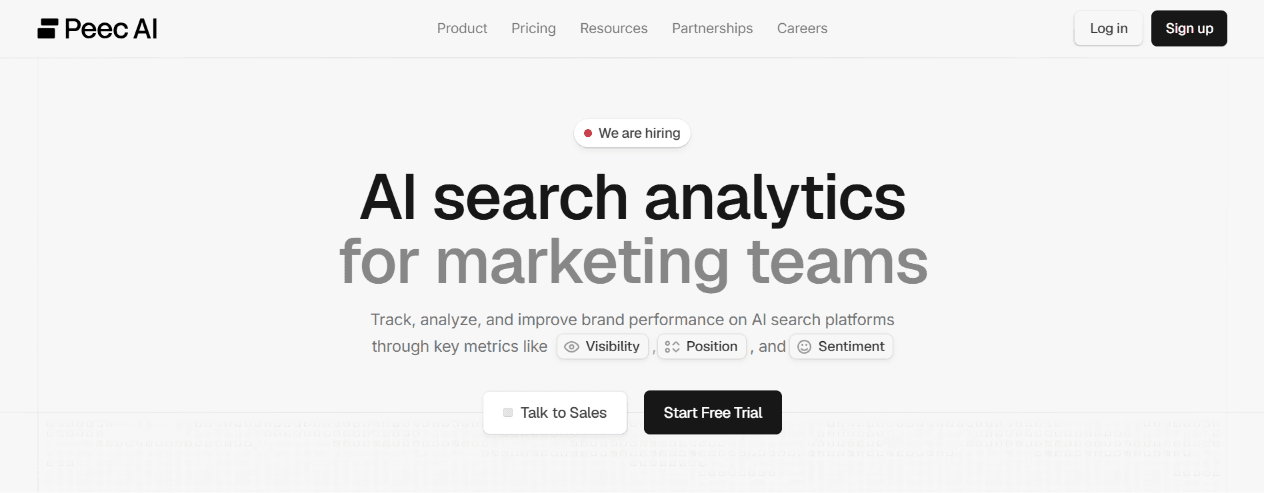
Peec AI combines visibility tracking with content optimization suggestions. The platform focuses on ChatGPT and Gemini, offering trial access for teams evaluating options.
The content optimization angle makes it particularly relevant for teams that want to connect visibility data directly to content strategy.
9. Scrunch AI
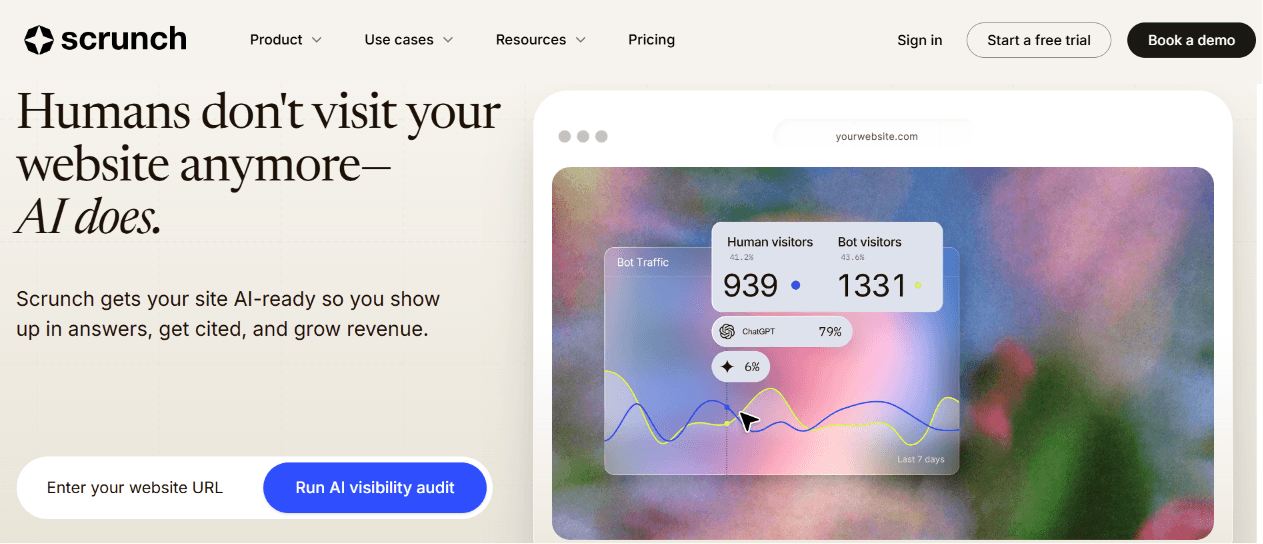
Scrunch AI covers ChatGPT, Claude, and Perplexity with competitor benchmarking and sentiment tracking. The platform targets mid-market brands looking for comprehensive monitoring without enterprise pricing.
For teams that want more than basic tracking but don't have enterprise budgets, Scrunch AI occupies a useful middle ground.
10. AIclicks
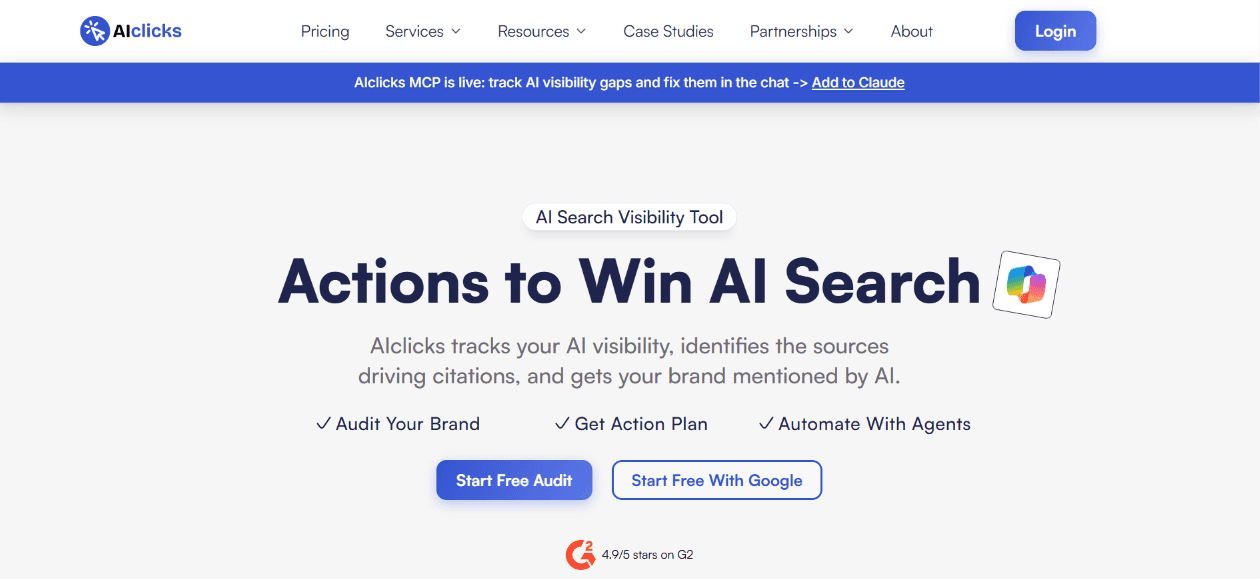
AIclicks pairs AI visibility tracking with generative content features. The free tier provides basic monitoring, making it accessible for teams just starting to explore AI visibility.
The generative content features distinguish AIclicks from pure monitoring tools, though teams focused solely on visibility tracking may find the additional features unnecessary.
How to improve your brand visibility in AI search engines
Close visibility gaps with competitors
Start by identifying the specific queries where competitors appear and you don't. Visibility gaps represent immediate opportunities, queries where your audience is already asking AI for recommendations and receiving answers that don't include you.
Once you know where the gaps are, you can prioritize which ones to close first based on query volume and relevance to your business.
Strengthen your citation sources
AI systems reference authoritative sources when generating answers. Building citations on sites that AI trusts, like industry publications, review platforms, and authoritative directories, increases the likelihood of being recommended.
The logic is similar to traditional link building, but the emphasis shifts toward sources that AI models are trained on and reference frequently.
Optimize content for AI answer engines
Content structure matters for AI retrieval. Clear answers to specific questions, structured data, comprehensive topic coverage, and original research all improve how AI systems understand and reference your brand.
AI models tend to favor content that directly answers questions rather than content that buries answers in lengthy explanations. Formatting for clarity helps both human readers and AI systems.
Monitor and react to visibility changes
AI rankings shift more frequently than traditional search results. Continuous monitoring lets teams respond within days rather than discovering problems months later.
When a competitor suddenly appears in recommendations where they didn't before, quick response can prevent the visibility loss from compounding.
How to choose the right AI brand visibility solution
The right tool depends on your specific situation. A solo marketer evaluating AI visibility for the first time has different requirements than an agency managing twenty client brands.
Team size: Solo marketers often start with free tools, while agencies typically want white-label dashboards and multi-client management
Platform priority: If your audience primarily uses ChatGPT, broad coverage matters less than depth on that specific platform
Integration preferences: Teams already using Ahrefs or Semrush may prefer integrated options, while others benefit from specialized platforms
Budget also plays a role. Free tools and reports provide a starting point for validation, while paid tiers unlock continuous monitoring and deeper analytics.
Start tracking AI brand visibility today
Most brands have no idea how AI describes them, or whether AI recommends them at all. The fastest way to find out is to see the data yourself.
Get your free AI visibility report from GrowthOS and see how ChatGPT, Claude, Gemini, and Perplexity perceive your brand in about two minutes.
FAQs about AI brand visibility monitoring
How often do AI-generated recommendations change?
AI answers can shift within days or weeks as models update and new content gets indexed. This frequency is why continuous monitoring catches changes that periodic manual checks miss.
Can AI brand visibility tools track niche or local queries?
Most platforms let you define custom prompts, including location-specific or industry-specific queries. This flexibility matters for brands targeting specialized audiences rather than broad categories.
What is the difference between AI visibility monitoring and traditional SEO tracking?
Traditional SEO tracks Google rankings and organic traffic. AI visibility monitoring tracks mentions and recommendations in answer engines like ChatGPT and Gemini, which use different ranking signals and don't appear in standard SEO dashboards.
How long does it take to improve brand visibility in AI search?
Improvements depend on content changes, citation building, and AI model updates. Most brands see measurable shifts within weeks to months of targeted optimization, though competitive categories may take longer.
How do marketing teams explain AI visibility metrics to leadership?
Share of voice, competitor comparisons, and visibility trends translate AI data into benchmarks executives already understand from traditional marketing reporting. Framing AI visibility as market share in a new channel typically resonates.
Newsletter
Enjoyed this? Get the next one.
SaaS organic growth field notes, straight to your inbox. No spam, unsubscribe anytime.
No spam. Unsubscribe anytime.
Book a demo
See a SaaS growth week
30 minutes. Bring one KPI and your stuck backlog, leave with a written shipping plan, even if you don't hire GrowthOS.